HORIZON INTERNATIONAL SOLUTIONS SITE
Working to Find and advance solutions to environment, health, poverty, and development problems
Around the world, extreme weather events are causing the public and scientists to ask, " What is happening to our world?" Torrential floods in Mokwa, Nigeria in 2025 killed more than 700 people as water raged through the center of the city. Ferocious fires still underway today in southwest France have caused more than 300,000 people to evacuate their homes. Extreme droughts "in Ethiopia, Kenya, and Somalia have left 23 million people without reliable access to food and water," according to Islamic Relief Canada.
Such extreme "weather events' are attributed by scientist all over the world as caused by climate change. They now warn that climate change is happening faster than any previous estimates indicated.
On the 18th of June 2026, the United Nations warned that "Millions of people already facing hunger, displacement and economic hardship could soon face another major climate shock... as extreme weather risks are intensifying across some of the world’s most vulnerable regions."

13 March 2022 -- Geneva / New York -- “Today, we call for an immediate cessation of all attacks on health care in Ukraine. These horrific attacks are killing and causing serious injuries to patients and health workers, destroying vital health infrastructure and forcing thousands to forgo accessing health services despite catastrophic needs.
"To attack the most vulnerable – babies, children, pregnant women, and those already suffering from illness and disease, and health workers risking their own lives to save lives – is an act of unconscionable cruelty.
_-_ruins.jpg)
Horizon International co-created the Exchange alongside USAID and organizations from across government, business, academia, and NGOs who believe that together we can tackle humanity’s greatest challenges. The Exchange is providing over 300 summaries of resources from Horizon’s Solutions Site with links to the full articles and case studies and anticipates to soon have over 600 posts from the Solutions Site’s 1,500 plus resources. Explore resources on the Exchange from Horizon International at http://www.globalinnovationexchange.org/resources/organization/3013.
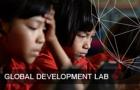
[img_assist|nid=1541|title=Drinking water|desc=Courtesy of CDC|link=none|align=left|width=180|height=120]In recognition of urgent, immediate need to address devastating health problems caused by lead in drinking water in Flint, Michigan, and in other places across the United States the U.S. Environmental Protection Agency (EPA) released DWMAPS – the Drinking Water Mapping Application to Protect Source Waters on the 19th of February 2016.

The world has met the Millennium Development Goal (MDG) target of halving the proportion of people without access to safe drinking water, well in advance of the MDG 2015 deadline, according to a report issued on March 6, 2012 by UNICEF and the World Health Organization (WHO). Between 1990 and 2010, over two billion people gained access to improved drinking water sources, such as piped supplies and protected wells.
The World Food Program’s (WPG’s) video game Food Force invites children, and people of all ages, to complete six virtual missions that reflect real-life obstacles faced by WFP in its emergency responses both to the tsunami and other hunger crises around the world.
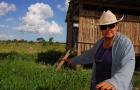
Small-scale dairy farmers in this remote area of Bolivia's northeastern Amazon region of Beni have a new hope for protecting their livestock from the fierce annual floods that start in December. The answer: artificial hills complete with grass and a feed storage shed, where the cattle can wait out the floods.
Doctors Without Borders/Médecins Sans Frontières (MSF) is currently battling outbreaks of cholera and measles in and around the town of Marere in southern Somalia.
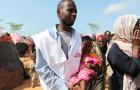
Humanitarian action and relief efforts save lives and provide essential aid in the aftermath of natural disasters, conflicts and other crises. But despite this critical role, humanitarian actions can result in damage to the environment, which is not often prioritized as a life-saving issue.
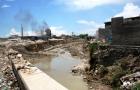
In the aftermath of a disaster that arrives as suddenly as the flooding in Pakistan did, the immediate impact—the deaths and the injuries—is usually followed by additional health risks caused by the difficult living conditions, the lack of hygiene, and the restricted access to clean water and basic health care services the disaster leaves in its wake.