
HORIZON INTERNATIONAL SOLUTIONS SITE
Working to Find and advance solutions to environment, health, poverty, and development problems
On April 2, 2025, Sulabh International inaugurated the Dr. Bindeshwar Pathak Memorial Centre on his 82nd birth anniversary. The Memorial chronicles the life and work of Dr. Pathak, who led a nationwide sanitation movement to persuade millions of India to adopt an affordable toilet system that he developed in 1968.

Our session will explore “Seeing the unseen: The value of water,” including climate change, ecosystems, sociocultural and economic factors along with how water scarcity, poor water quality and inadequate sanitation negatively impact food security, livelihood choices and educational opportunities for poor families across the world and, in fact, everyone.

China has made progress in improving water supply and sanitation(WSS) coverage over recent decades. The WSS services include water treatment plants and pipelines, sewer networks and wastewater treatment plants, and household service connections.
We take Zhejiang province as an example.
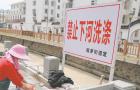
For his Internship with Horizon International, an NGO based at Yale University, Zakaria focused on WASH, seeking stories to film from trash polluting city waterways serving as drinking water for local communities to the struggles to find potable water in rural communities. It was this search which lead him to the Ivory Coast.
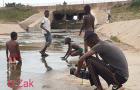
During World Water Week (25-30 August 2019) in Stockholm, The World Health Organization (WHO) and UN-Water called for an urgent increase in investment in strong drinking-water and sanitation systems. They cited a report by WHO published on behalf of UN-Water that “reveals that weak government systems and a lack of human resources and funds are jeopardizing the delivery of water and sanitation services in the world’s poorest countries – and undermining efforts to ensure health for all.” The report,” Weak systems and funding gaps jeopardize drinking-water and sanitation in the world’s poorest countries,” UN-Water Global Assessment and Analysis of Sanitation and Drinking-Water 2019 (known as the GLAAS report), surveyed 115 countries and territories, representing 4.5 billion people. It showed that, in an overwhelming majority of countries, the implementation of water, sanitation and hygiene policies and plans is constrained by inadequate human and financial resources.
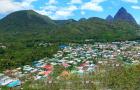
In 1965, the government of St. Lucia and the Rockefeller Foundation undertook what became a sixteen-year project to determine the optimal strategy for controlling locally-endemic schistosomiasis mansoni. Many of the world’s leading researchers on schistosomiasis control participated in the project, including experts in epidemiology, snail ecology, water and sanitation, social mobilization, clinical trials, immunology, and health economics. In the process, they brought infection levels in the new island nation to an impressive and steady low. Now fifty years later, the island has maintained its control of the parasite and may be on the cusp of achieving national Schistosoma mansoni elimination status.
The Authoritative Guide to Water and Sanitation Related Diseases, with Many Revised, Updated and New Chapters, Accompanies the First Edition
Augmenting authoritative interdisciplinary coverage in the first edition, this new edition of Water and Sanitation-Related Diseases and the Changing Environment expands upon the significance of the changing environment to disease vectors, food systems and nutrition, and population, and the importance of ecosystem health to human health. Many chapters stand as they are in first edition to which readers are referred, and which are not included in this volume.
A new modeling approach using satellite data will likely to enhance our ability to develop cholera risk maps in several regions of the globe. The model (GCRM) is based on monthly air temperature, precipitation, availability of WASH (water, sanitation and hygiene) infrastructure, population density and severity of natural disaster.
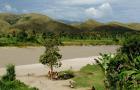
“My health is in my hands”! School kids affirmed their resolve. The Beautiful Feet International (BFI) WinS project is making them catch on how to take responsibility for their own health and wellness in school and at home as a good way to securing their future despite the prevailing poor environmental learning conditions they are daily being subjected to due to annual flooding, environmental degradation and government neglect which has made WASH emergency higher in the area. All the schools in the WinS project are in Evbuotubu, a flood prone community in Egor Local Government Area of Edo State, Nigeria.
[img_assist|nid=1541|title=Drinking water|desc=Courtesy of CDC|link=none|align=left|width=180|height=120]In recognition of urgent, immediate need to address devastating health problems caused by lead in drinking water in Flint, Michigan, and in other places across the United States the U.S. Environmental Protection Agency (EPA) released DWMAPS – the Drinking Water Mapping Application to Protect Source Waters on the 19th of February 2016.