HORIZON INTERNATIONAL SOLUTIONS SITE
Working to Find and advance solutions to environment, health, poverty, and development problems
Our session will explore “Seeing the unseen: The value of water,” including climate change, ecosystems, sociocultural and economic factors along with how water scarcity, poor water quality and inadequate sanitation negatively impact food security, livelihood choices and educational opportunities for poor families across the world and, in fact, everyone.
13 March 2022 -- Geneva / New York -- “Today, we call for an immediate cessation of all attacks on health care in Ukraine. These horrific attacks are killing and causing serious injuries to patients and health workers, destroying vital health infrastructure and forcing thousands to forgo accessing health services despite catastrophic needs.
"To attack the most vulnerable – babies, children, pregnant women, and those already suffering from illness and disease, and health workers risking their own lives to save lives – is an act of unconscionable cruelty.
_-_ruins.jpg)
Jennifer Selendy worked with seven people, including Royesh, to rescue more than 500 people, including more than 400 schoolgirls, their family members and teachers, from October through November, according to the Thirty Birds Foundation, at https://www.30birdsfoundation.org/, the organization their group founded to support the evacuation mission.
“I could not live with myself if I did not act to help women and girls facing such extreme emotional and physical abuse and systemic injustice,” Jennifer Selendy, Managing partner Selendy & Gay.

Faces of Courage: Intimate Portraits of Women on the Edge, a photo-essay by Mark Tuschman documents the lack of autonomy that women and girls face in the developing world and all the efforts designed to empower them. This article is from the section on "Healthcare Workers: Silent Heroes."
The Authoritative Guide to Water and Sanitation Related Diseases, with Many Revised, Updated and New Chapters, Accompanies the First Edition
Augmenting authoritative interdisciplinary coverage in the first edition, this new edition of Water and Sanitation-Related Diseases and the Changing Environment expands upon the significance of the changing environment to disease vectors, food systems and nutrition, and population, and the importance of ecosystem health to human health. Many chapters stand as they are in first edition to which readers are referred, and which are not included in this volume.
Horizon International co-created the Exchange alongside USAID and organizations from across government, business, academia, and NGOs who believe that together we can tackle humanity’s greatest challenges. The Exchange is providing over 300 summaries of resources from Horizon’s Solutions Site with links to the full articles and case studies and anticipates to soon have over 600 posts from the Solutions Site’s 1,500 plus resources. Explore resources on the Exchange from Horizon International at http://www.globalinnovationexchange.org/resources/organization/3013.
Horizon International announces Partnership with the Global Innovation Exchange, “a global online marketplace for innovations, funding, insights, resources and conversations, allowing the world to better work together to address humanity’s greatest challenges.” The Exchange is providing summaries of resources from Horizon’s Solutions Site with links to the full articles and case studies. The founding partners include the U.S. Global Development Lab at USAID and the world’s leading donors, foundations, universities, research organizations, non-governmental organizations, and news media. View a comprehensive and growing list of partners.
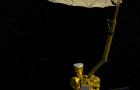
A new NASA satellite that will peer into the topmost layer of Earth's soils to measure the hidden waters that influence our weather and climate is in final preparations for a January 29, 2015 dawn launch from California. The Soil Moisture Active Passive (SMAP) mission will take the pulse of a key measure of our water planet: how freshwater cycles over Earth's land surfaces in the form of soil moisture. This data will be used to enhance scientists' understanding of the processes that link Earth's water, energy and carbon cycles.
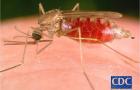
The number of people dying from malaria has fallen dramatically since 2000 and malaria cases are also steadily declining, according to the “World malaria report 2014.” Between 2000 and 2013, the malaria mortality rate decreased by 47% worldwide and by 54% in the WHO African Region - where about 90% of malaria deaths occur.
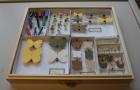
National competition launched to stimulate development of a new tool to digitally record images and data from museum insect collections. Other than the team leader, team members are not required to be U.S. Citizens or to reside in the United States.