HORIZON INTERNATIONAL SOLUTIONS SITE
Working to Find and advance solutions to environment, health, poverty, and development problems
The government of Mexico has taken a decisive step to save the vaquita - a porpoise threatened by extinction - and to promote sustainable fisheries in the upper Gulf of California for the benefit of fishers and their families, says WWF-Mexico.
The Pew Environment Group’s Global Ocean Legacy Program is working with the government of Bermuda, nongovernmental organizations, and scientists to establish the ‘Bermuda Blue Halo,’ a very large, no-take marine reserve to protect the Sargasso Sea within Bermuda's waters.
Results of study on prairie grasslands show differences across the months. Does it matter whether long periods of hot weather, such as last year's heat wave that gripped the U.S. Midwest, happen in June or July, August or September? Scientists studying the subtle effects of heat waves and droughts say that when such weather events happen makes a big difference.
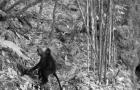
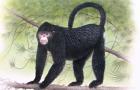
Researchers working in Northern Myanmar captured the first photographs of the recently discovered Myanmar snub-nosed monkey, Rhinopithecus strykeri. The images were reported by Fauna & Flora International (FFI) on 10 January 2012. A joint team from Fauna & Flora International (FFI), Biodiversity and Nature Conservation Association (BANCA) and People Resources and Conservation Foundation (PRCF), caught pictures of the monkey on camera traps placed in the high, forested mountains of Kachin state, bordering China.
A new monkey, a self-cloning skink, five carnivorous plants, and a unique leaf warbler are among the 208 species newly described by science in the Greater Mekong region in 2010 and highlighted in a new WWF report, Wild Mekong.
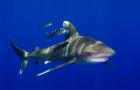
The Republic of the Marshall Islands is now home to the world’s largest shark sanctuary. The Nitijela, the Marshallese parliament, unanimously passed legislation last week that ends commercial fishing of sharks in all 1,990,530 square kilometers (768,547 square miles) of the central Pacific country’s waters, an ocean area four times the landmass of California.
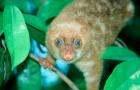
Final Frontier: Newly Discovered species of New Guinea (1998 – 2008), a WWF study reports that 1,060 new species have been discovered the island of New Guinea from 1998 to 2008.
Bird species in rainforest fragments in Brazil that were isolated by deforestation disappeared then reappeared over a quarter-century, according to research results published on June 22, 2011 in the journal PLoS (Public Library of Science) ONE.
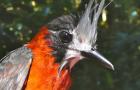
A conservation area covering a mere 23.5 hectares has become a refuge for a unique and endangered animal species in the northeastern Peruvian region of San Martín: the Andean titi monkey.
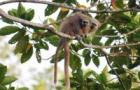
Dugongs are believed to have been at the origin of mermaid legends when spotted swimming in the water from a distance. Now the remaining populations of this seemingly clumsy sea mammal, commonly known as a sea cow, are at serious risk of becoming extinct within the next 40 years.